

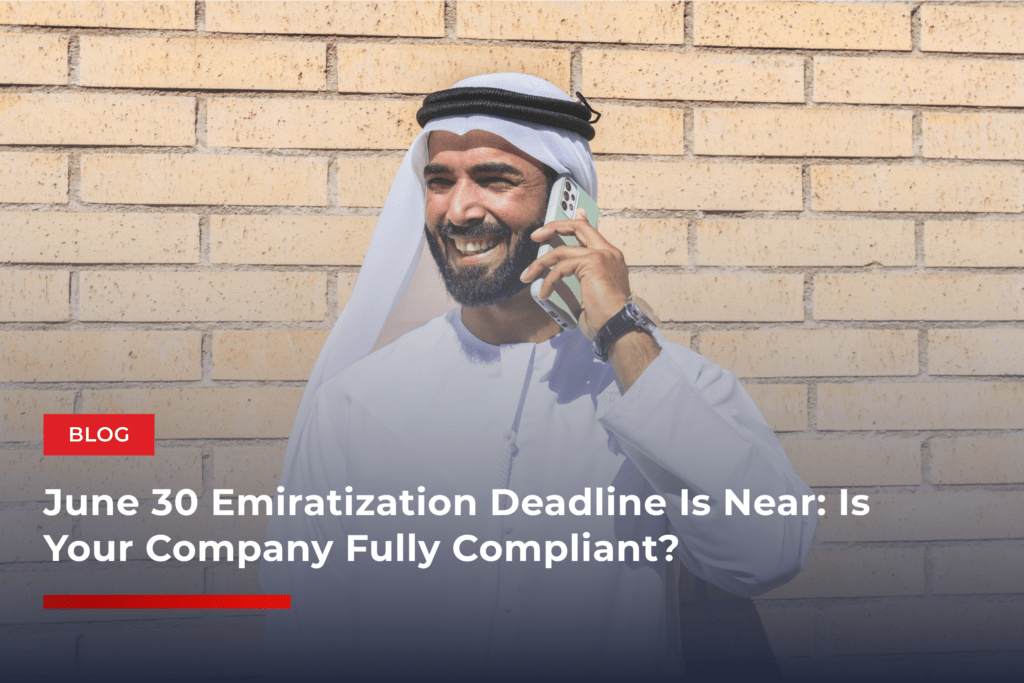
As the UAE continues pushing forward with its national workforce development strategy, private sector companies are once again approaching a critical compliance milestone: the June 30 Emiratization deadline.
For businesses operating in the UAE mainland, especially those with 50 or more employees, this date is more than just another regulatory checkpoint—it’s a major compliance requirement that can directly impact your operations, reputation, and financial standing.
The question is simple: Is your company fully compliant?
What Is the June 30 Emiratization Deadline?
Under the UAE’s Emiratization regulations, mainland private sector companies with 50+ skilled employees are required to increase the number of Emirati employees in their workforce according to government-defined targets.
By June 30, eligible companies must achieve the required mid-year Emiratization percentage increase or face financial penalties.
This initiative is part of the UAE’s long-term national employment strategy designed to increase Emirati participation in the private sector and create sustainable career opportunities for UAE Nationals.
Who Needs to Comply?
The Emiratization rules generally apply to:
- Mainland private sector companies
- Businesses with 50 or more skilled workers
- Companies operating across industries including technology, retail, logistics, healthcare, finance, hospitality, and more
Free zone companies are typically not subject to the same Emiratization quotas unless specified by their authority.
What Happens if Your Company Misses the Deadline?
The UAE government has significantly increased enforcement in recent years. Companies that fail to meet Emiratization targets may face:
Financial Penalties
Businesses can receive fines starting from approximately:
- AED 8,000 per month for every Emirati position not fulfilled
- The penalty amount increases annually
Operational Restrictions
Non-compliant companies may also face:
- Reduced MOHRE classification status
- Restrictions on work permit issuance
- Increased government transaction fees
- Delays in labor approvals and visa processing
Increased Audits & Investigations
Authorities are actively monitoring businesses for:
- Fake Emiratization practices
- Ghost employment
- False payroll records
- Non-genuine job roles
Recent enforcement actions show that the government is taking compliance very seriously.
Common Emiratization Mistakes Businesses Make
Many companies wait until the last minute or misunderstand what true compliance involves.
Hiring Emiratis Only on Paper
Authorities now conduct strict inspections and digital audits to identify fake employment structures.
No Long-Term Retention Strategy
Hiring Emirati employees without proper onboarding, training, or career development often leads to high turnover.
Ignoring Nafis Opportunities
Some companies fail to utilize the UAE’s Nafis program, which provides incentives and salary support for hiring Emiratis.
Delayed Recruitment Planning
Waiting too close to the deadline makes it harder to source qualified Emirati talent.
How to Check If Your Company Is Compliant
Here’s a quick compliance checklist:
✅ Have you achieved your required Emiratization percentage increase?
✅ Are your Emirati employees actively working in genuine roles?
✅ Are salaries processed correctly through WPS?
✅ Is your company registered and updated on Nafis?
✅ Are employment records and contracts fully compliant?
✅ Are your HR and payroll systems aligned with MOHRE requirements?
If the answer to any of these is unclear, your business may need immediate review.
Proven Strategies to Meet Emiratization Targets
1. Start Recruitment Early
The closer you get to June 30, the more competitive the Emirati hiring market becomes.
2. Use Specialized Emiratization Partners
Working with experienced recruitment and HR outsourcing firms can speed up the hiring process and improve retention.
3. Build Genuine Career Opportunities
Emirati candidates are looking for growth, training, and long-term career paths—not just temporary positions.
4. Leverage Nafis Support
Nafis offers:
- Salary support
- Training programs
- Pension contributions
- Child allowances for Emirati employees
These incentives significantly reduce hiring costs.
5. Conduct Internal Compliance Audits
Review payroll, contracts, visa records, and employee activity before authorities do.
Why Compliance Is More Than Just Avoiding Fines
Companies that successfully embrace Emiratization benefit from:
- Stronger government relationships
- Improved corporate reputation
- Access to skilled local talent
- Better positioning for government projects
- Long-term workforce stability
In today’s UAE market, Emiratization is becoming part of a company’s overall business credibility and sustainability strategy.
How HR & Outsourcing Partners Can Help
Professional HR outsourcing and workforce solutions providers can assist with:
- Emirati talent sourcing
- Nafis registration and support
- Compliance audits
- Payroll and WPS management
- Employee onboarding and retention strategies
- MOHRE coordination
This allows businesses to remain focused on growth while ensuring compliance requirements are handled properly.
Final Thoughts
The June 30 Emiratization deadline is approaching quickly, and businesses that delay action risk financial penalties, operational disruption, and reputational damage.
The UAE government’s message is clear: Emiratization is not optional—it is a long-term national priority.
Companies that act early, hire strategically, and build genuine Emirati workforce integration will not only remain compliant but position themselves for stronger long-term growth in the UAE market.
Now is the time to assess your workforce, review your compliance status, and ensure your company is fully prepared before the deadline arrives.